

Ukraine attracted $52.4 billion in external financing in 2025, approximately 25% more than in 2024 or 2023, the Ministry of Finance reported on 30 December.
Since the start of the full-scale war, international partners have directed nearly $168 billion in budget support to Ukraine.
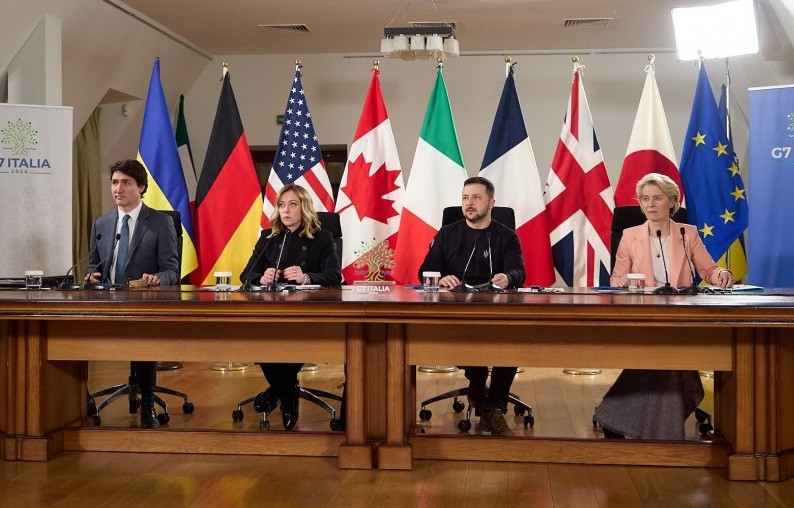
The main source of financial assistance to Ukraine in 2025 was the G7 mechanism using revenues from frozen Russian assets. Through this channel, Ukraine received $37.9 billion.
The European Union provided another $12.1 billion through the Ukraine Facility financial instrument, of which $668 million were grants and the remainder loans.
The IMF provided $912 million after successful completion of two reviews under the Extended Fund Facility program. The World Bank directed $733 million toward projects in healthcare, education, and private sector support.
Japan allocated $453 million across three World Bank projects: $190 million for road network resilience (DRIVE), $183 million for public investment management systems (SURGE), and $80 million for private sector development (RISE).
The Council of Europe Development Bank provided $232 million for payments to internally displaced persons.
International support allowed Ukraine to fully cover social and humanitarian expenditures: pension payments, salaries for education and healthcare workers, social protection, and humanitarian programs.
All of Ukraine's internal financial resources were directed toward the security and defense sector.
The European Union will remain Ukraine's primary donor, planning to allocate 90 billion euros to Ukraine during 2026-2027.
Ukraine and the IMF also reached expert-level agreement on a new EFF program for 2026-2029 worth $8.1 billion, which will be submitted for approval by the executive board in 2026.