
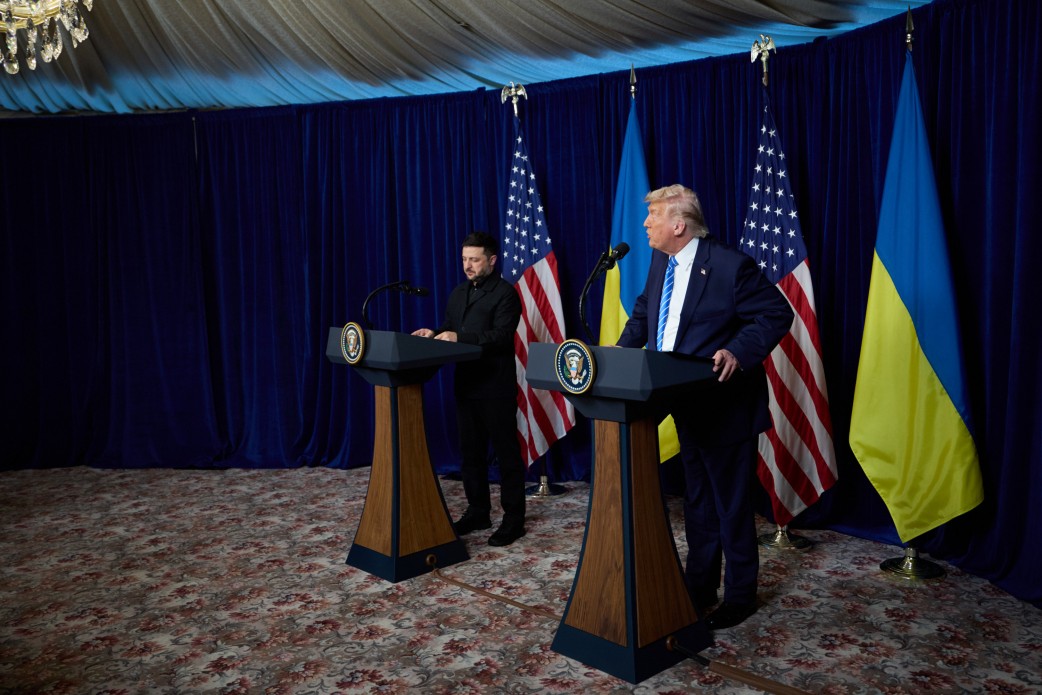
Donald Trump and Volodymyr Zelenskyy announced what they called significant progress on peace negotiations during a joint press conference at Mar-a-Lago on 28 December 2025, though the meeting also featured Trump defending his relationship with Vladimir Putin by invoking his long-running "Russia, Russia, Russia hoax" rhetoric and praising the Russian president's willingness to help Ukraine.
"President Putin was very generous in his feeling toward Ukraine succeeding. Including supplying energy, electricity, and other things at very low prices," Trump told reporters after meeting with Zelenskyy.
The statement came as Trump described a 2.5-hour phone call with Putin earlier in the day—a conversation during which Russia's president rejected calls for a ceasefire.
What progress was actually announced
Zelenskyy outlined specific areas of agreement reached between American and Ukrainian negotiating teams:
- 20-point peace plan: 90% agreed
- US-Ukraine security guarantees: 100% agreed
- US-Europe-Ukraine security guarantees: "almost agreed"
- Military dimension: 100% agreed
- Prosperity plan: being finalized
Trump was more cautious with percentages. "I don't like to say percentages. I just think we're doing very well," he said, describing "one or two very thorny issues" remaining.
The territorial status of Donbas emerged as the central sticking point. When asked whether agreement had been reached on a proposed "free trade zone" in the region, Trump responded: "The word 'agreed' is too strong. I would say not agreed, but we're getting closer."
Putin rejects ceasefire
Trump confirmed that Putin refused to agree to a ceasefire during their lengthy phone conversation.
"Not a ceasefire, and that's one of the points that we're working on right now," Trump acknowledged. He explained Putin's position: "They're fighting and to stop and then to have to start again, which is a possibility... he doesn't want to be in that position. I understand that position."
When pressed on what happens if negotiations collapse, Trump was blunt: "They keep fighting. And they keep dying."
Trump's "Russia hoax" defense
Throughout the press conference, Trump repeatedly referenced what he calls the "Russia, Russia, Russia hoax"—his long-standing claim that investigations into Russian interference in the 2016 US election were fabricated.
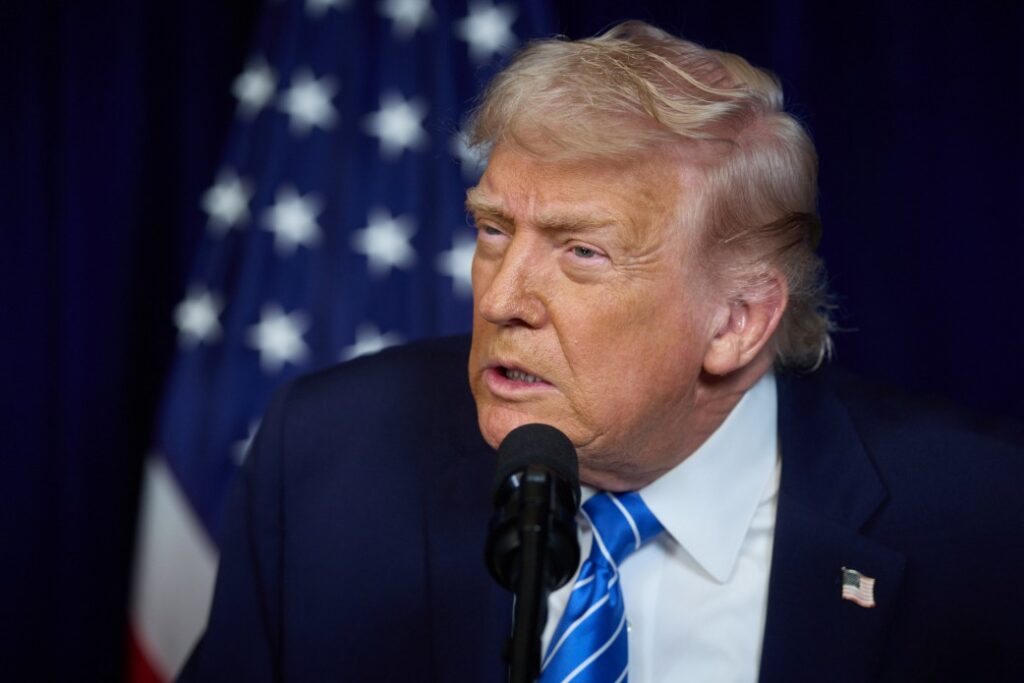
"Don't forget, we went through the 'Russia, Russia, Russia' hoax together," Trump said of his relationship with Putin. "And he'd call me, I'd call him, I'd say, 'Can you believe the stuff that they're making up?' And it turned out we were right; they made it all up."
Trump described the investigations as "a terrible, made-up, fictional thing by crooked Hillary and by Adam 'Shifty' Schiff and bad people, sick people."
He also used the press conference to repeat his claim that "if the election weren't rigged and stolen in 2020, you wouldn't have had this war."
Zaporizhzhia nuclear plant and Russian "cooperation"
Trump discussed the Russian-occupied Zaporizhzhia Nuclear Power Plant, Europe's largest, claiming Putin is "actually working with Ukraine on getting it open."
"He's been very good in that sense. He wants to see that open. And he hasn't hit it with missiles; hasn't hit it with anything," Trump said, praising Putin's handling of the facility where 5,000 workers remain.
Working groups and next steps
Both leaders announced the formation of working groups to continue negotiations. The US team will include Steve Witkoff, Jared Kushner, Secretary of State Marco Rubio, Defense Secretary Pete Hegseth, and General "Raisin-Cane." Ukraine's delegation will be led by Defense Minister Rustem Umerov, Deputy Minister Serhii Kyslytsya, and General Hnatov.
"That working group, by the way, importantly, will also then be working with Russia," Trump emphasized.
The leaders agreed to host European counterparts—including Emmanuel Macron, Keir Starmer, Friedrich Merz, Giorgia Meloni, and NATO Secretary General Mark Rutte—in Washington in January.
Parliament or referendum: Zelenskyy leaves options open
Zelenskyy outlined two possible paths for approving any peace deal—a significant clarification of Ukraine's domestic ratification process.
"We can use a referendum like for the plan, or we cannot use a referendum. It's one of the keys," Zelenskyy explained. "We can use this possibility of parliament to vote according to the law, or to have a referendum. It doesn't matter."
The choice between parliamentary vote and national referendum, he said, ultimately rests with Ukrainian society: "If the plan will be very difficult for our society, very difficult, of course our society has to choose who has to vote, because it's their land. The land not of one person; it's the land of our nation for a lot of generations."

The statement opens a potential path for parliamentary approval of contentious terms rather than requiring a full national referendum—a faster but potentially more politically fraught route.
Trump noted that a poll showed "91% in favor of ending this war," though he did not cite the source.
When asked whether Ukrainian refugees in Poland and Germany could participate in any referendum, Zelenskyy confirmed they would have voting rights but said building the necessary infrastructure "can't be in one day, very quickly" given millions of displaced citizens.
Timeline remains uncertain
Asked how long it might take to finalize an agreement, Trump offered a wide range: "If it went really well, you know, maybe a few weeks. And if it went poorly, longer. And if it went really poorly, it's not going to happen."
He added: "It's possible it doesn't happen. But, you know, in a few weeks we will know one way or the other."