
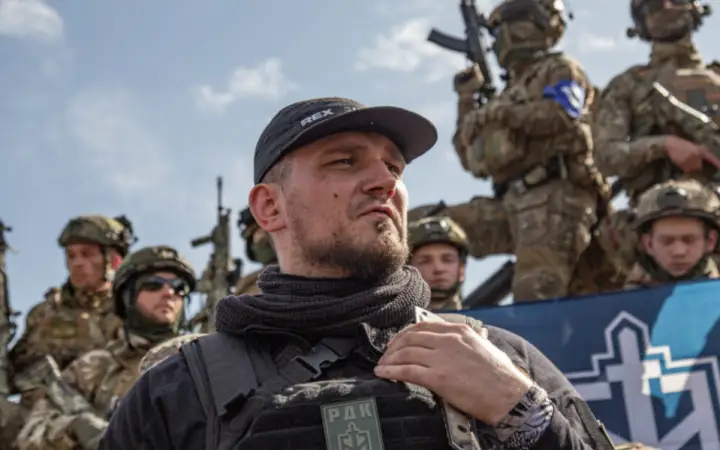

Two weeks ago, Denis Kapustin was asked why he, a Russian, fights for Ukraine. His answer: to atone with his life for the evil his compatriots have inflicted. On the night of 26-27 December, an FPV drone killed him on the Zaporizhzhia front. He was 41.
The Russian Volunteer Corps (RDK), a military unit of anti-Putin Russians fighting for Ukraine, confirmed the death of its founder and commander overnight. "We will definitely take revenge, Denis. Your work lives on," the unit wrote.
A complicated figure
Kapustin, known by his callsign "White Rex," was a controversial figure—a Moscow-born neo-Nazi activist who founded a far-right clothing brand and organized MMA fighting tournaments for European extremists.
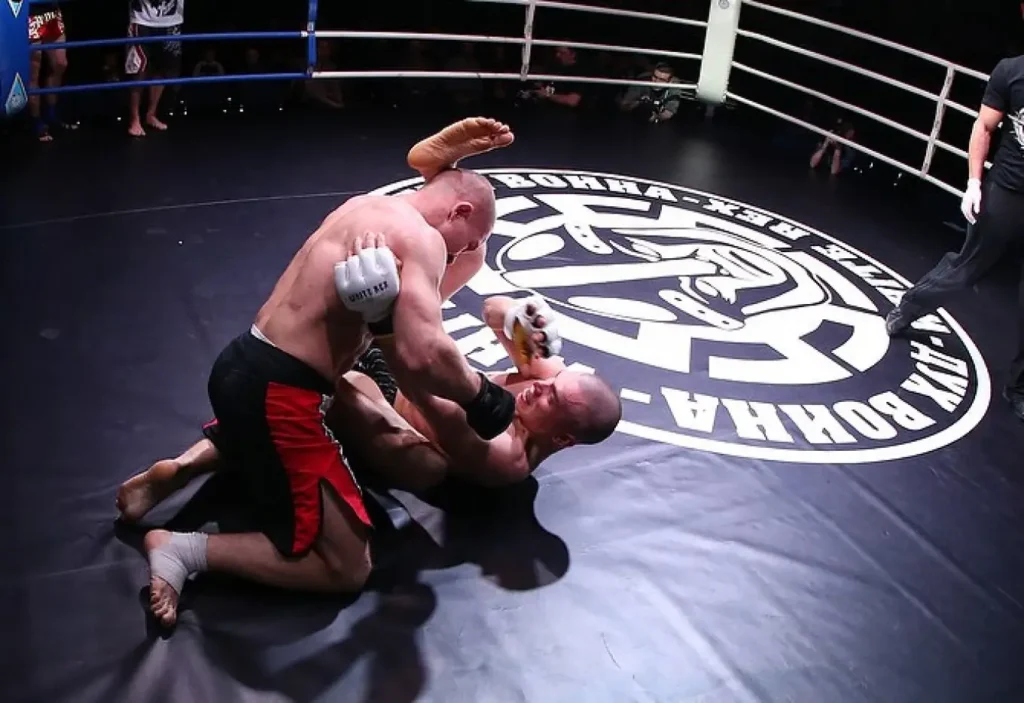
His rise to neo-Nazi circles happened in Germany, where his family moved in 2001. Germany's interior ministry called him "one of the most influential neo-Nazi activists" in the country, noting he had "professionalized the fighting subculture" across Europe.
This activity was galvanized by his move back to Russia, where he founded the neo-Nazi and martial arts brand White Rex in 2008.
Yet he was also a Euromaidan supporter who moved to Ukraine in 2017—years before Russia's full-scale invasion.
After the invasion began, Ukraine's military intelligence permitted him to form the RDK, and the unit became one of the war's most effective psychological operations.
The paradox was not lost on anyone: Putin invaded Ukraine to "denazify" it. A Russian neo-Nazi became one of his most effective opponents.
Igor Lutsenko, commander of Ukraine's aerial reconnaissance support units, called Kapustin's death "a great loss for us."
"He was remarkably effective at 'reprogramming' Russians, and they would switch to fight on our side," Lutsenko wrote. "Denis's successes in this are one of the reasons I say our victory is entirely achievable. Russia is weak because it has no truth on its side in this war, but we do. Denis implemented this moral advantage in practice. Russians believed him and followed him."

Lutsenko recounted that just two weeks ago, he witnessed Kapustin being asked about his motivation to fight for Ukraine.
"He answered, among other things, that—at the cost of his life—he wanted to atone for the evil his compatriots have inflicted on Ukraine," Lutsenko wrote. "I don't know if they believed him. But Denis said it, and Denis did it."
Maksym Zhorin, deputy commander of Ukraine's Third Army Corps, called Kapustin "a true rightist" who "took responsibility, acted, feared nothing, and died as a true warrior."
"Denis built a unit that became legendary thanks to its bold—even audacious—operations," Zhorin wrote. "This is truly an enormous loss for our movement, for the Ukrainian military, and for the entire Ukrainian state. We remember. We will avenge."
The Freedom of Russia Legion, a separate unit of Russian fighters that conducted joint raids with the RDK, called Kapustin's death "a heavy loss for everyone who consistently opposed Putin's imperial policy."

Russian Volunteer Corps fights for Ukraine and to dismantle Putin’s regime
The man who proved Putin's "red lines" were bluffs
The unit grew to over a thousand fighters, drawing recruits from Russian emigrants and prisoners of war whom Kapustin personally convinced to switch sides.
The RDK's first major operation came in January 2023—a raid on the Novaya Kakhovka riverbank that killed at least 12 Russian soldiers and captured one prisoner, providing Ukrainian intelligence with critical information on Russian reserves.
In May 2023, the unit derailed approximately 20 freight train cars in Bryansk Oblast—a sabotage operation Kapustin said involved 45 people, including a "partisan network" inside Russia.
But the RDK gained international attention later that month when it crossed into Belgorod Oblast with tanks and armored vehicles, captured several border villages, and penetrated 40 kilometers into Russian territory—the largest incursion since the full-scale invasion began.
Twenty-four hours later, Kapustin held a press conference on the Ukrainian side of the border, displaying captured weapons, a Russian armored personnel carrier, and prisoners. Wagner boss Yevgeny Prigozhin publicly blamed Russia's defense ministry for failing to defend the country's borders.
Trending Now

"Belgorod, Bryansk, Kursk, Voronezh, Rostov, Moscow—wait for us," Kapustin promised.
In June 2023, Kapustin led another raid, capturing Russian soldiers and offering to hand them personally to Belgorod governor Vyacheslav Gladkov. Gladkov refused to meet with RDK representatives; the prisoners went to Ukraine's exchange fund instead.

The raids didn't stop there. The following year, in March 2024, the RDK joined forces with the Free Russia Legion and Siberian Battalion for their most ambitious operation yet—an 11-day "special liberation operation" across Russia's Belgorod and Kursk oblasts.
The fighters claimed to have seized villages, destroyed over 130 units of Russian equipment, and forced Russia to divert forces from the Kharkiv front.

"We were able to open a second front," Kapustin said at a press conference. "Now the theater of military operations is not only the territory of Ukraine, but also the territory of the Russian Federation."
Five months later, Ukraine launched its incursion into Kursk Oblast.
"The RDK's raid challenged the perception of Russia's effective control over its own border and showed that Ukrainian-linked operations on Russian territory did not constitute a 'red line' that should never be crossed," wrote Anton Shekhovtsov, a researcher on European far-right movements.
Russia designated the RDK a terrorist organization and sentenced Kapustin in absentia to life imprisonment—twice: once in November 2023, again in November 2024.

A legacy that defies ordinary classification

In one of his last interviews, Kapustin described his vision:
"Victory number one is helping Ukraine defend its territorial integrity. But victory number two—the big victory—is to plant the RDK flag above the Kremlin wall. And I sincerely believe in this. This is our goal, this is our mission."
In December 2025, the RDK submitted an application for its representatives to participate in the Parliamentary Assembly of the Council of Europe's new Platform for Dialogue with Russian Democratic Forces. The deadline for submissions is 5 January 2026—ten days after Kapustin's death.
Given his ideological positions, approval was always unlikely. The RDK has not announced a successor.
He never reached the Kremlin. But Denis said it, and Denis did it.


