


For the first time in history, Russia has deployed all eight of its nuclear-powered icebreakers simultaneously to keep Arctic shipping lanes open.
Rosatom CEO Alexey Likhachev announced in November that the unprecedented deployment would begin in December, with ship tracking data from MarineTraffic confirming all vessels are now operational, gCaptain reported.
The mobilization comes as early, unexpectedly thick ice has shut down access to key export terminals in the Gulf of Ob and Yenisei Gulf—waterways connecting Siberian oil and gas fields to the Arctic Ocean—and even this all-out effort couldn’t prevent a sanctioned LNG carrier from failing to reach its destination.
The deployment reveals the mounting strain on Russia’s Arctic export infrastructure at a critical moment.
Urals crude has plunged to $43.52 per barrel—its lowest price since Russia launched its full-scale invasion of Ukraine in February 2022—while export revenues fell to $11 billion in November, down $3.6 billion from a year ago, according to the International Energy Agency’s December report.
Russia’s war economy relies on keeping Arctic oil and LNG flowing, but even the world’s most powerful icebreaker fleet is struggling against nature and sanctions simultaneously.
Shadow fleet tanker blocked
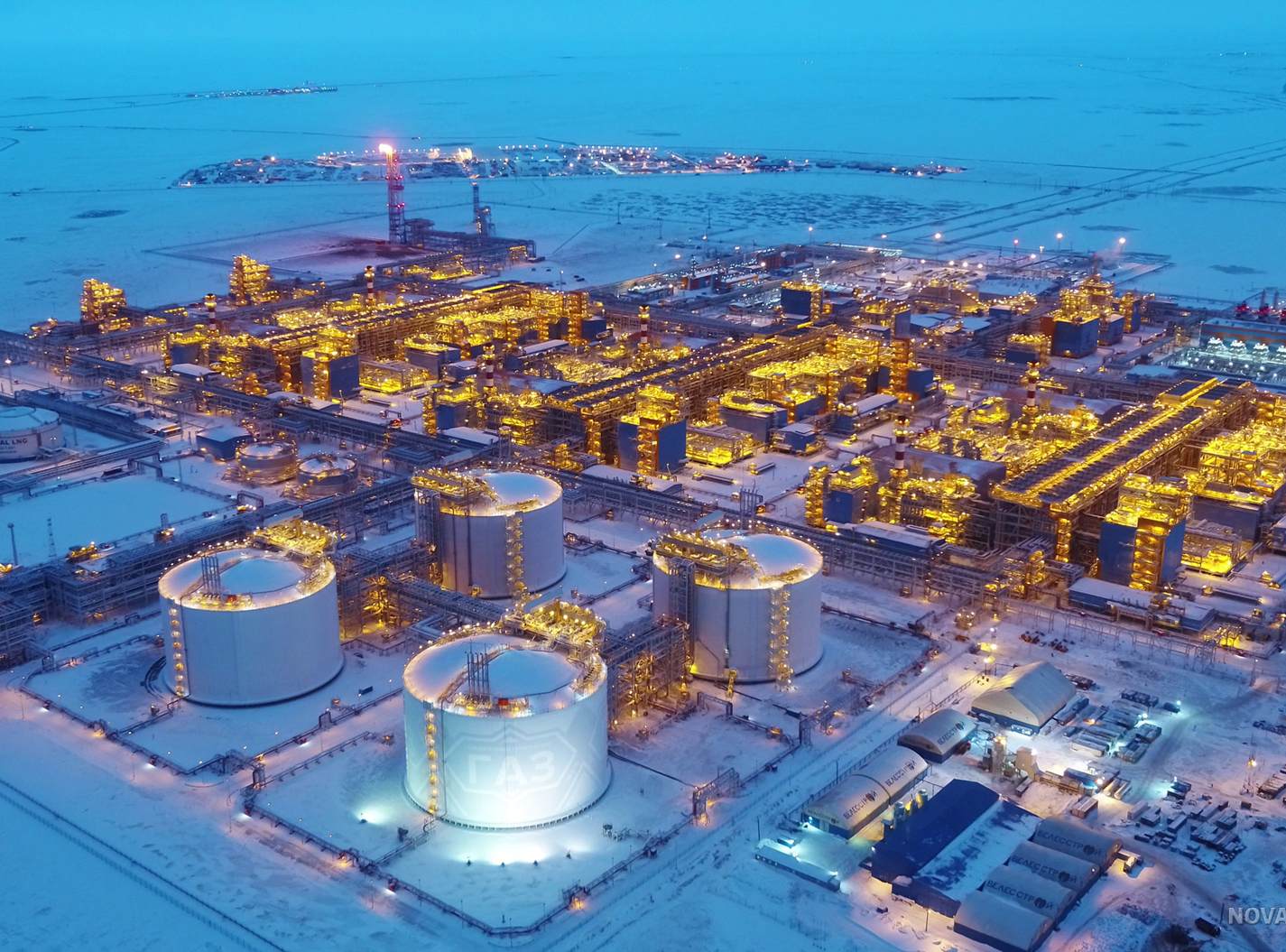
The limits of Russian capability became clear when the LNG carrier Buran made four failed attempts between 2 and 7 December to reach the Arctic LNG 2 terminal in the Gulf of Ob, The Barents Observer reported. Despite an escort from two nuclear icebreakers—50 Let Pobedy and Arktika—plus two Arc7 heavy ice-class LNG vessels from the neighboring Yamal LNG project, the sanctioned tanker never made it through.
The Arctic is melting, Ukraine is bleeding, and G7 “climate leaders” still won’t quit Yamal LNG
Sea ice in the Gulf of Ob reached 50 centimeters in thickness amid temperatures plunging below -20°C (-4°F)—earlier and more impenetrable than in previous years. After nearly a week of back-and-forth maneuvering, the Buran retreated to the Kara Sea.
The failure is particularly damaging because Russia has only one Arc7-class carrier available for Arctic LNG 2 this season—the Christophe de Margerie—and it’s currently near Kamchatka, thousands of kilometers away. That vessel previously sustained damage during a winter transit and spent months in a Chinese shipyard for repairs.
An “impressive” effort that signals desperation
Tom Sharpe, a former Royal Navy officer who commanded the icebreaker HMS Endurance, called the deployment “impressive” in operational terms—eight complex nuclear vessels operating simultaneously in the harshest conditions on Earth.
But he noted the mobilization is “unsustainable” and reveals how much pressure Putin’s war economy faces.
Trending Now
“This mobilisation shows how vital sea access to Russia’s ‘Extreme North’ has become, and how desperate Putin is to keep it open,” Sharpe wrote in The Telegraph. “He needs that oil and gas to support his war economy.”
The fleet includes four new Project 22220 Arktika-class vessels, two older Arktika-class icebreakers, and two shallow-draft Taymyr-class ships designed for river estuaries. No Western country comes close to matching this capability—the United States currently operates just two aging heavy icebreakers, though the Trump administration signed a $6.1 billion deal with Finland in October for 11 new vessels, with the first delivery expected in 2028.
Aging fleet, tightening sanctions
Yet Russia’s dominance is eroding. Western sanctions against Rosatomflot have slowed construction of new icebreakers, while the older Taymyr, Vaygach, and Yamal are approaching the end of their service lives.
The massive Leader-class icebreaker Rossiya, intended to enable year-round Northern Sea Route navigation, remains only 30 percent complete after repeated delays.
Meanwhile, Arctic cargo volumes hit 38 million tonnes in 2024—a record, but less than half the 80 million tonnes Putin ordered as Russia’s target for that year. To meet Moscow’s ambitions, Russia must move ever more volume through infrastructure that’s already maxed out.
The math is stark: falling prices, falling revenues, rising costs, and an Arctic lifeline that freezes shut when Moscow needs it most.


