

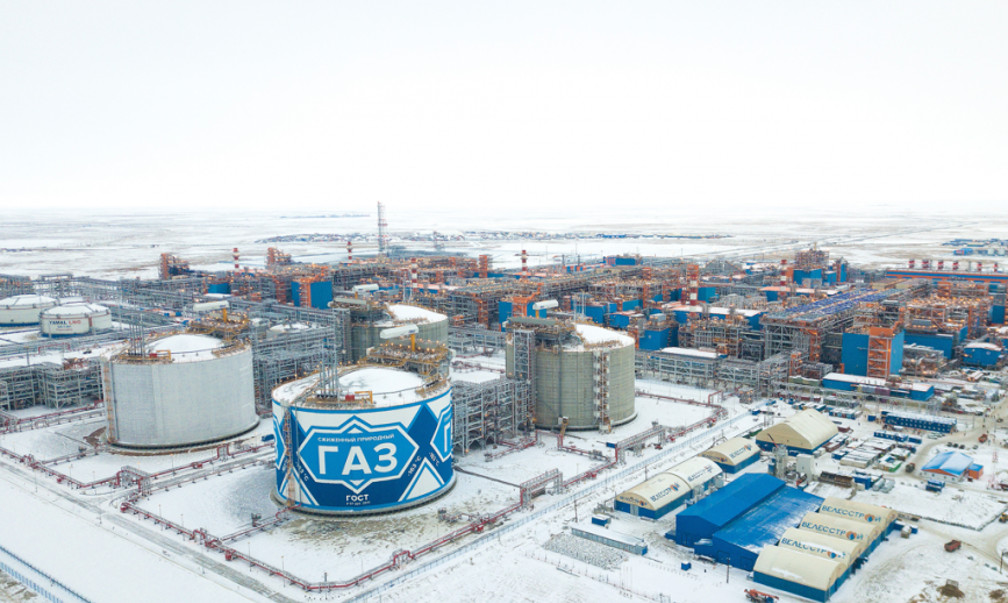
Russia’s liquefied natural gas exports to China hit a record in November, with shipments more than doubling year-on-year to 1.6 million metric tons—enough to overtake Australia as Beijing’s second-largest supplier after Qatar, Bloomberg reported.
The surge follows months of steep discounting. Since August, Novatek has slashed prices by 30-40% on cargoes from its sanctioned Arctic LNG 2 project to attract Chinese buyers, Reuters reported in November.
The $21 billion Arctic LNG 2 facility began producing gas in December 2023 but failed to sell a single cargo until August 2025.
Once Novatek started offering discounts of $3-4 below the Asian benchmark price of around $11 per million British thermal units, China finally agreed to buy. That means cargoes worth over $44 million at market rates are selling for $28 million to $32 million each.
Beijing sets the terms
China has turned Russia’s desperation into leverage. Since August, state-owned PipeChina has converted its Beihai terminal in southern China into a dedicated entry point for sanctioned Russian LNG, refusing access to other suppliers, Reuters reported. The UK sanctioned Beihai in October.
Washington has not acted—in part because sanctioning PipeChina would also block US gas sales to China.
The arrangement leaves Moscow with little room to negotiate. A source close to the Russian government summed up the relationship to Reuters: “China does not behave like an ally. Sometimes it lets us down and stops payments, sometimes it takes advantage, sometimes it is outright robbery.”
Record sales, delivery problems
Trending Now
Even as exports surge on paper, Russia struggles to deliver physically. As Euromaidan Press wrote, Moscow deployed all eight nuclear icebreakers simultaneously for the first time this month—yet still couldn’t get the sanctioned LNG carrier Buran through early Arctic ice to reach Arctic LNG 2. The project has had to cut output as winter conditions worsen.
China, meanwhile, hasn’t imported US LNG since February amid the trade war—making discounted Russian gas more attractive despite sanctions risks.
But the relationship is exploitation, not alliance. Russia sells cheaply because it has no alternative; China buys cheaply because it can. Before the war, Russia set gas prices for Europe. Now it accepts whatever Beijing offers and calls it a strategic pivot.


