
- Twice in three days, Ukrainian drones struck Belbek air base in Crimea
- The drones hit three Russian warplanes—two right before takeoff
- Attacks on the busy air base are increasing in pace and impact
- At stake: Russia's control of the air over occupied Crimea
On Friday night or early Saturday morning, attack drones operated by the Ukrainian state security service—the vaunted SBU—struck Belbek air base in Russian-occupied Crimea, 240 km from the front line in southern Ukraine.
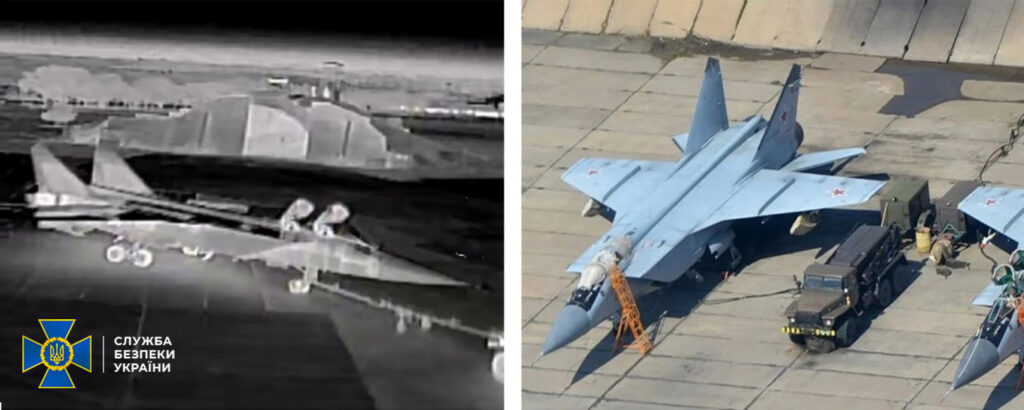
The drones hit two Russian air force Sukhoi Su-27 fighters and destroyed at least one of them, the SBU claimed. Screen grabs from the drones’ video feeds seem to confirm the hits. One of the twin-engine, supersonic Su-27s was reportedly fully armed and preparing for takeoff when the drone barreled in.
The SBU claimed it also hit the control tower at Belbek. Damage to the tower “could complicate the organization and control of flights at the airfield,” the SBU stated.
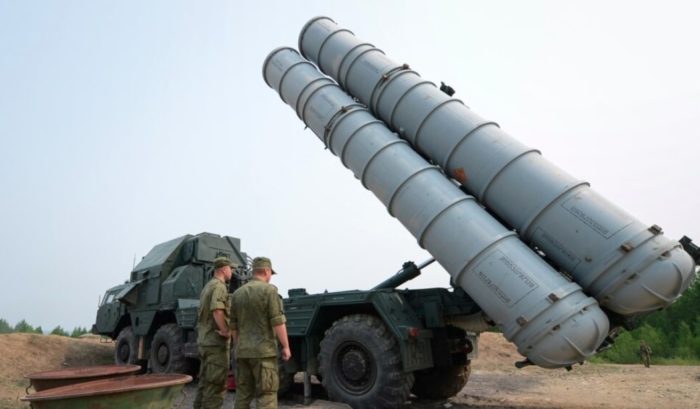
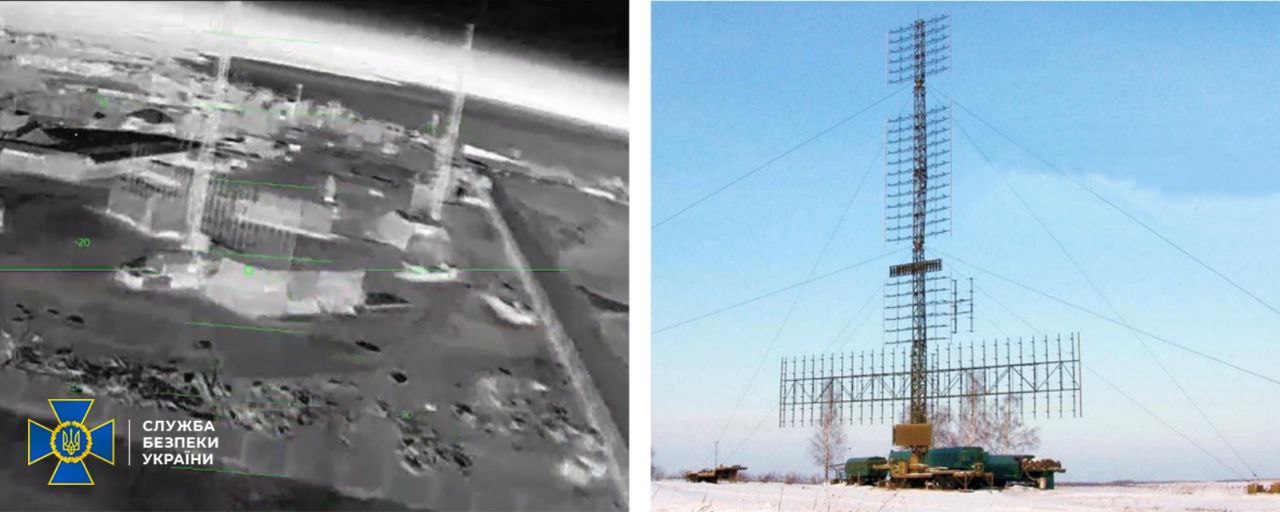
It was the second SBU raid targeting Belbek in three days. On 18 December, the SBU's drones pummeled the sprawling air base, hitting a Mikoyan MiG-31 interceptor, a Pantsir air-defense vehicle, and three radars. “The elimination of the components of this echeloned system significantly weakens the enemy’s defense and military capabilities in the Crimean direction,” the SBU claimed.
Not since May 2024 has Belbek—one of Russia's three busiest air bases in Crimea alongside Saky and Kacha—burned this brightly. On 15 and 16 May 2024, Ukrainian forces bombarded Belbek with American-made ATACMS ballistic missiles, destroying three parked aircraft.
The difference between the 2024 raid and the recent one is that the earlier attacks were not repeatable owing to a shortage of the 1.5-ton, 300-km-range missiles. But Ukraine has long-range attack drones in abundance—and can continue striking Belbek the way it has done in recent days.
Belbek is home to the Russian air force's 38th Fighter Aviation Regiment, part of the 27th Mixed Aviation Division, which has aircraft scattered across Crimean bases.
Busiest base
As recently as 2021, Belbek was the most important Russian air base in Crimea. It hosted as many as 46 Su-27s and Sukhoi Su-30s from the 38th Fighter Aviation Regiment, as well as a contingent of a dozen Sukhoi Su-34 fighter-bombers, alongside an array of support planes and helicopters, and many radars and air defenses. Some abandoned Ukrainian air force Mikoyan MiG-29 fighters, captured by the Russians in 2014, functioned as decoys on some of the base's outlying aprons.
Aircraft flying from Belbek fly top cover for Russian ground forces and bombard Ukrainian forces across southern Ukraine. It's not for no reason that, shortly receiving its first small allotment of ground-launched ATACMS, the Ukrainian army took aim at Belbek
The rockets rained down, scattering thousands of grenade-sized submunitions. In the aftermath of the May 2024 raids, commercial satellite imagery confirmed widespread destruction at Belbek. An Su-27, two MiG-31s, a radar, and a decoy MiG-29 had burned to the ground.
But the Ukrainians never got more than a few dozen ATACMs and couldn't fire them all at Belbek. The base was fairly safe for the next year, aside from occasional, and minimally destructive, drone raids.
Trending Now
It helped that the Russians built several hardened shelters at the base that should be able to withstand impacts from most drones.
That changed this month as Ukrainian drones hit harder, more frequently, and more accurately. A MiG or Sukhoi might be safe when it's tucked inside its hardened shelter; it's not safe when it's out on the tarmac, crew on board, and munitions underwing in the moments before taking off.
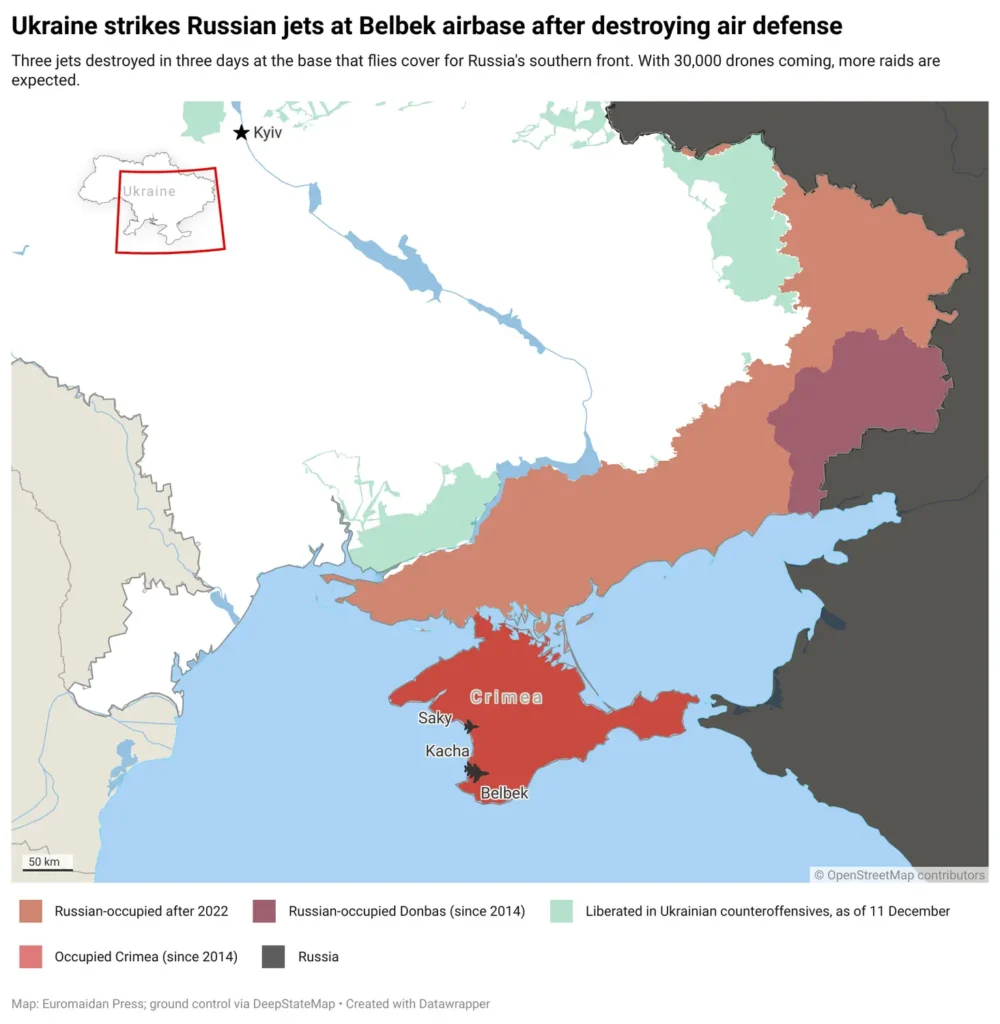
Ukrainian operators hit that MiG-31 and one of the Su-27s this month while the planes were preparing to take off.
The timing points to major advancements in Ukrainian surveillance over Crimea.
Ukraine's drone campaign over Crimea has worked in stages, and now enters its most destructive phase. Through much of last year and this year, the drone operators focused their lethal attention on Russian air defenses: radars, fixed missile sites, and mobile launchers and guns.
Having rolled back the air defenses, the operators shifted their attention to Russian aircraft parked at Belbek, Saky, Kacha, and other air bases. Since August, Ukrainian drones have struck no fewer than 14 parked airplanes and helicopters, likely destroying most of them.
And the drone attacks show no sign of stopping. Ukraine may not have any more ATACMS. But it's on track to acquire 30,000 long-range attack drones this year—and potentially many more next year.