


The Luge World Cup competition takes place in Lake Placid on 19-20 December, where Russian athletes will compete as "Individual Neutral Athletes" (AIN). No flag. No anthem. No national symbols.
The International Luge Federation (FIL) initially confirmed six athletes of Russian nationality were registered for the World Cup at Mount Van Hoevenberg, with qualification for the 2026 Winter Olympics in Italy on the line. That changed within days—three have just been barred.
Russia has not competed in a World Cup luge race in nearly four years, after sport-wide restrictions followed Russia's full-scale invasion of Ukraine in February 2022. Now the door is open again—and it's opening on American ice.
ORDA's stance: "We host. FIL decides."
The Olympic Regional Development Authority (ORDA), which operates the Lake Placid venues, issued a prepared statement emphasizing logistics and distancing itself from the political decision.
ORDA stated it is committed to hosting a "safe, fair, and professional" event for all FIL-approved participants, and that neutral athletes will be identified as AIN, with no flags, symbols, or anthems. It referred further questions to the FIL.
AIN stands for Athlètes Individuels Neutres, French for "Individual Neutral Athletes." Critics argue the tidy acronym masks what is actually being normalized: Russians returning to international sport while Russia continues its war.
Ukraine's reaction: "They are not neutral."
Ukraine's top luger, Anton Dukach, did not hesitate. Letting Russians race at all is wrong, he says—and calling them neutral is worse.
"They are not neutral. They support war."
Ukraine, Dukach added, has already sent evidence arguing that these athletes do not meet neutrality standards.
"We have proof, and we already sent evidence that they are not neutral."
The catch is the one that keeps resurfacing: Ukrainian athletes and federations claim they have documentation, but the specific evidence is not publicly detailed. That gap—between what is alleged, what is proven, and what is published—leaves space for federations to proceed. It also leaves Ukraine furious that "neutrality" is being treated as a box-checking exercise rather than a hard line.
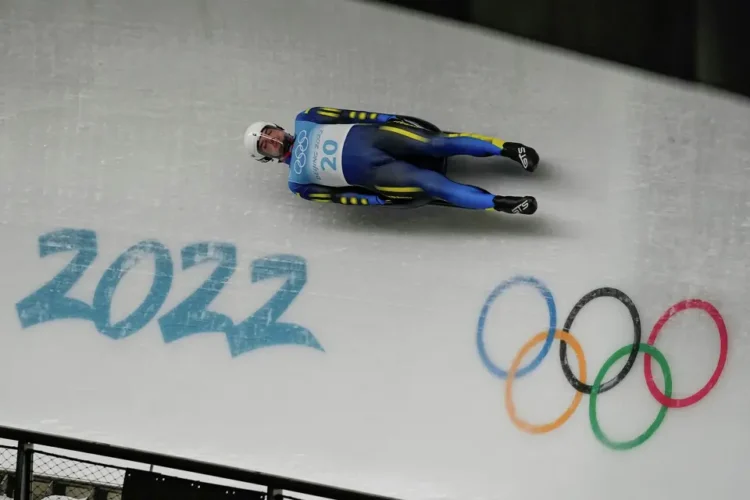
Who is racing in Lake Placid?
FIL initially approved these AIN entries for Lake Placid:
However, just a few days ago, the International Luge Federation withdrew the eligibility of three Russian athletes who intended to slide this weekend. The federation's executive board removed Aleksandr Gorbatsevich, Sofiia Mazur, and Kseniia Shamova from the list of eligible sliders after new evidence emerged.
- Sofiia Mazur
- Daria Olesik
- Kseniia Shamova
- Aleksandr Gorbatsevich
- Matvei Perestoronin
- Pavel Repilov

What "neutral" is supposed to mean—and what it actually allows
The AIN framework is rooted in the International Olympic Committee's approach: Russian athletes may compete without national representation if they meet neutrality requirements. Athletes must not actively support the war, must not be affiliated with military or security agencies, must avoid political propaganda, and must sign a declaration of neutrality.
The IOC's AIN standards for the 2026 Winter Games include a direct disqualifier: athletes who "actively support the war" are not eligible.
The controversy originates in the gray zones:
- What counts as "active support"—a post, an appearance, a statement, a sponsorship deal?
- How are affiliations verified—especially when sport, state institutions, and security structures overlap?
- Who bears the burden of proof—and what happens when evidence is submitted but not disclosed?
The policy looks strict on paper. The fight is over enforcement—and over whether neutrality is realistic in a war where the Russian state has made sport part of national propaganda.
The military-service question—acknowledged, then waved through
One of the most concrete details is also one of the most uncomfortable: Russia has compulsory military service for men aged 18 to 30, lasting one year.
FIL's executive board, according to the federation's spokesperson, noted that compulsory service "does not in itself constitute grounds for exclusion under current IOC principles."
That sentence clarifies what this policy will not do. It will not automatically exclude athletes who have served under mandatory conscription—with possible deployment to the war zone. Critics argue this is precisely the kind of "technical compliance" that renders neutrality a label rather than a meaningful standard.
FIL's official position: its Executive Committee approves the eligibility of athletes and support personnel proposed by the Russian Luge Federation to participate as AIN in individual competitions.
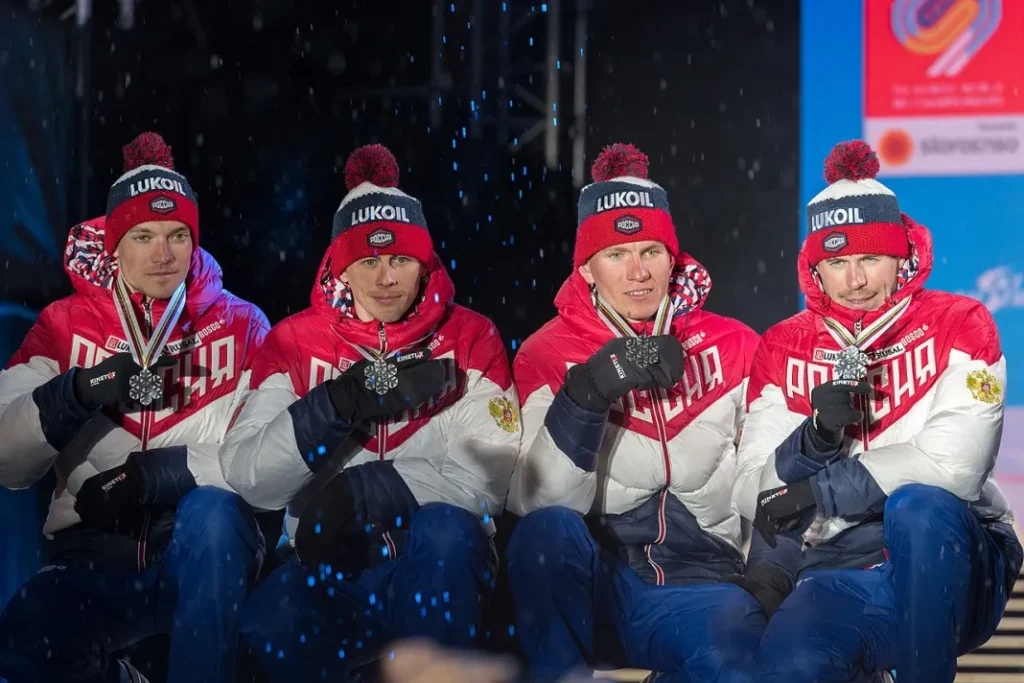
Sliding sports are reopening the doors
Trending Now
The luge entries in Lake Placid are not alone. The International Bobsleigh & Skeleton Federation (IBSF) has already taken similar steps—publishing a list of Russian athletes granted AIN status, allowing them to compete in IBSF events "with immediate effect."
The list named two bobsledders for women's bobsleigh—Liubov Chernykh and Sofiia Stepushkina—and seven skeleton athletes: Viktoriia Fettel, Alena Frolova, Polina Kniazeva, Daniil Romanov, Vladislav Semenov, Polina Tiurina, and Ermei Zykov.
IBSF also described its review mechanics: an IBSF AIN Task Force, supported by Sportradar, examined applications, and athletes and support personnel were required to formally agree to conditions in the Federation's participation criteria.
That detail is the "policy credibility" argument federations rely on: we're not letting Russia back in; we're running a vetted process. Critics argue the process may still be too permissive—or too easily gamed.

The legal turning point: 19 October 2025
IBSF's shift is not framed as purely moral or political. It is also framed as legal.
On 19 October 2025, the IBSF Appeals Tribunal ordered that the ban on Russian athletes (as approved by the 2022 IBSF Congress) was vacated in part. The Tribunal decided the ban remains enforceable only to the extent that it prevents athletes from competing who do not satisfy the IOC's AIN rules for Milan-Cortina 2026.
A legal body narrowed the ban. Federations adapted. The result is what you're now seeing across sliding sports: Russians back on start lists, stripped of symbols, rebranded as "neutral" individuals.
Ukraine's broader argument: sport isn't neutral—and Russia knows it
The strongest language comes from Ukraine's political and sporting leaders, who argue that Russia uses sport as a means of propaganda.
Russian athletes openly support the war, participate in propaganda events, deliver speeches justifying armed aggression, and, in some cases, receive military ranks.
In New York, Ukraine's permanent mission's First Secretary Dmytro Tymoshenko recently stated that "Russia has killed at least 644 members of the Ukrainian sports community, wounded 20, held 20 more in captivity, and 13 are missing." He added that 799 sports facilities had been damaged, of which 180 were completely destroyed, and noted that Belarus "actively aided Russia in committing these crimes."
These deaths are not only personal tragedies—they are a long-term blow to Ukraine's athletic future. Coaches, mentors, and role models erased forever.

This is the context Ukraine is pointing to when it says "neutral athlete" status is not a technical matter. Allowing Russians back into sport creates an illusion of normalcy—of business as usual—while the war continues.
The counter-argument: passports aren't guilty
The dispute isn't only Ukraine vs. Russia. It's also about the Olympic movement's internal tension: collective punishment versus individual eligibility.
In 2023, IOC President Thomas Bach argued against banning Russians and Belarusians from the Paris 2024 Olympics solely based on their passports, saying that excluding athletes on that basis does not align with the Olympic Charter's values and mission.
Ukraine's response is uncompromising: loosening restrictions legalizes war crimes by helping normalize Russia's presence, and any concessions create the false impression that the war has ended when it has not.
Can sport pretend it's separate from politics when states actively use sport as state propaganda—and when athletes become part of that system?
"Neutral" today, normalized tomorrow?
Lake Placid is not the end of this story. It's a signal.
When sports federations introduce a "neutral" status, they're often not just managing a single event—they're setting a template for the entire Olympic cycle. The Lake Placid World Cup and other upcoming events matter because they are not exhibitions. They are part of the qualification system for the Milan-Cortina 2026 Games.
That's why Ukraine is reacting so sharply: the Russians racing "neutrally" this weekend can become dozens next month, and a normalized presence by the time the Olympics arrive.
The core question remains unresolved—the one Ukrainian luger Anton Dukach openly declares: What does neutrality mean when the war is still ongoing, and when neutrality itself is the thing being disputed?


