

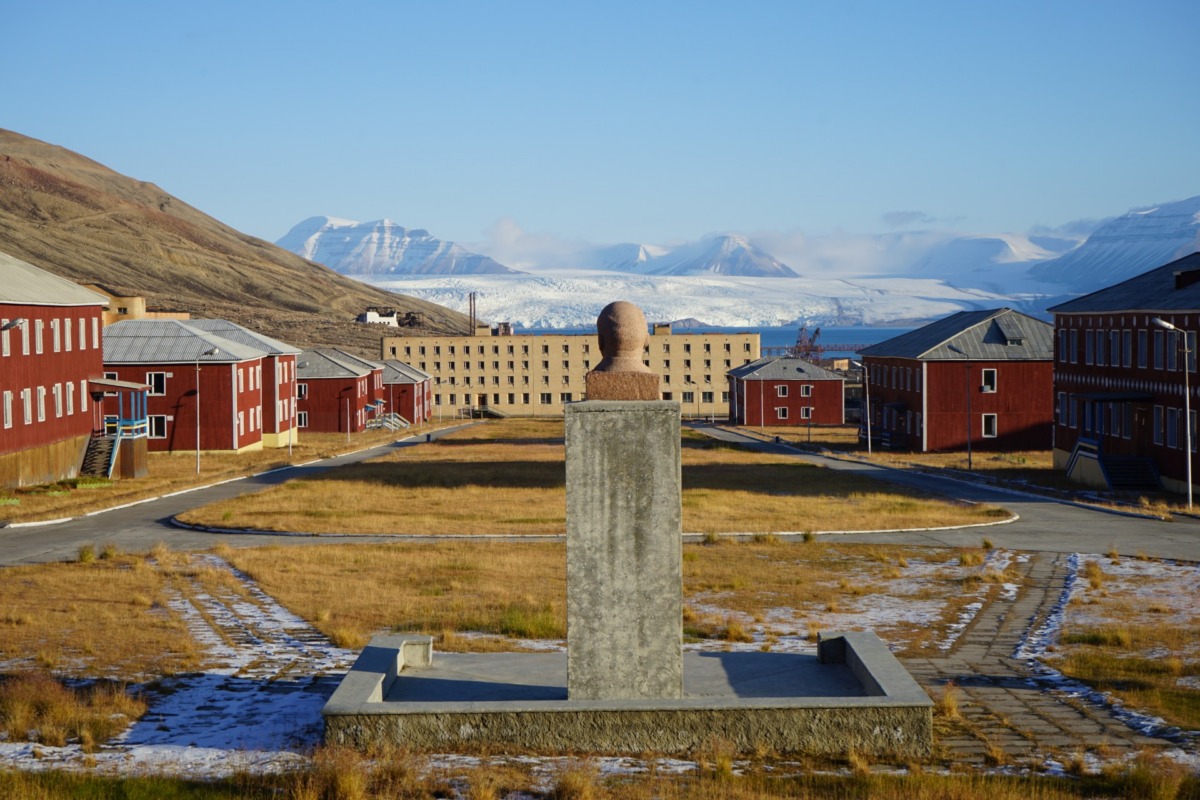
Russia has stepped up hybrid threat activities in the Norwegian archipelago of Svalbard as part of a long-running campaign to undermine Norway’s sovereignty and test Western unity, according to the European Centre of Excellence for Countering Hybrid Threats (Hybrid CoE). Since 2014—the year when Moscow started its initial invasion of Ukraine—Russia has used a consistent strategy of grey-zone provocations, symbolic gestures, and legal ambiguity in the Arctic region to challenge Norway’s authority on Svalbard while avoiding open military conflict, the Hybrid CoE paper states.
Moscow’s long game to destabilize Svalbard
The Hybrid CoE paper outlines how Moscow uses historical narratives, religious symbolism, and surprise visits to build domestic support and provoke responses from Norway. These acts are designed to create "ambiguity and strategic paralysis" and put pressure on Norway to deviate from Western sanctions, which the paper warns could threaten broader European security.
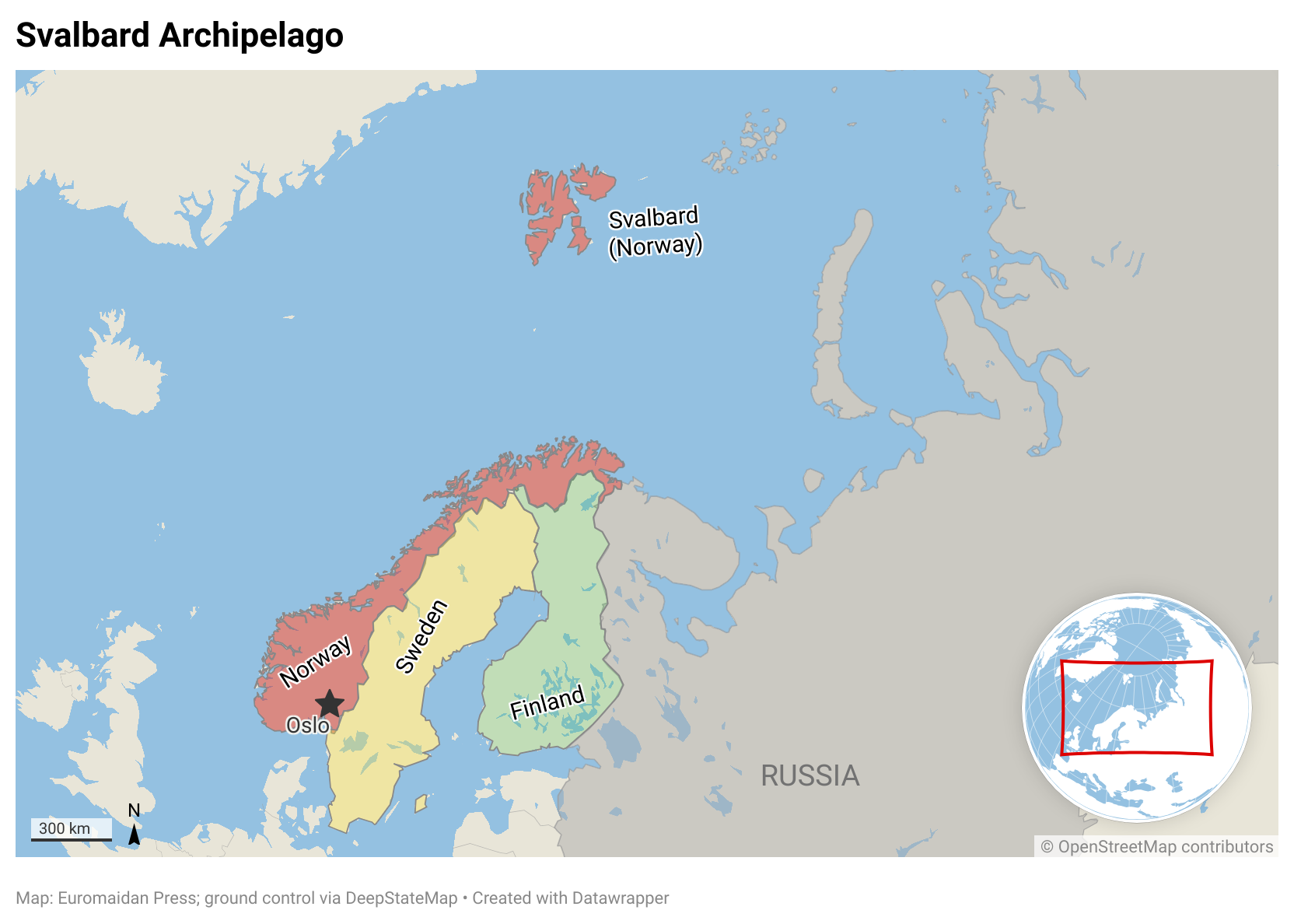
The authors trace this approach back to the Second World War, arguing that Moscow has sought to assert “special rights” on the archipelago by bi-lateralizing issues and exploiting the Svalbard Treaty’s provisions.
Russian actions on Svalbard include information campaigns targeting both Russian and Norwegian audiences, accusations of treaty violations by Oslo, and attempts to portray Norway as hostile to Russian interests.
“Hybrid threats aim to undermine government authority and limit the room for decision making,” the report reads.

“Ukraine’s security is directly connected to ours” – 8 Nordic-Baltic countries pool $500M weapons package
Provocations below the conflict threshold
One high-profile incident was the April 2015 surprise visit of then Deputy Prime Minister Dmitry Rogozin, who was under Schengen sanctions at the time. Russia invoked the Svalbard Treaty to justify his entry, portraying Norway’s protest as a discriminatory treaty violation. Shortly after, Rogozin was filmed at a Russian Arctic camp near the North Pole alongside a polar explorer and a Russian Orthodox bishop. Moscow later used the controversy to retaliate by denying visas to Norwegian lawmakers.
In 2016, Chechen paramilitary forces and FSB personnel unexpectedly landed at Longyearbyen Airport on their way to Barneo Camp. Although the visit followed formal rules, its opaque nature raised alarms in Norway. That same year, Norway tightened regulations for passenger declarations and cargo, prompting Russian criticism and accusations of obstruction.
In 2017, Norway’s invitation to NATO’s Parliamentary Assembly members sparked another Russian backlash. The Kremlin falsely claimed the visit was a military act and used pro-government media to question Norway’s sovereignty, claiming alleged historical Russian rights to the archipelago.
Hybrid threats at sea and on land
Russia’s campaigns intensified in 2020 during the centenary of the Svalbard Treaty. Foreign Minister Sergey Lavrov demanded bilateral consultations and claimed Russian activities were being unfairly restricted. Officials referred to old maps labeling the area as “Holy Russian Islands” and claimed that “Spitsbergen (an obsolete name for Svalbard used in Russian) is also our land.”
Russia also escalated legal pressure over the surrounding maritime zones. Moscow repeatedly disputed Norway’s exclusive rights in the Fisheries Protection Zone and continental shelf around Svalbard. When the Norwegian Coast Guard detained a Russian trawler in 2020, Moscow issued a formal note warning it was “ready to use national powers to defend its rights.”

Phase 0 begins: ISW says Russia is laying psychological groundwork for a future NATO war
The Hybrid CoE paper details how Russian naval exercises have come closer to Svalbard. In 2021, a Northern Fleet group made an unusual move west of the archipelago during a tactical mission, a maneuver seen as coercive signaling without open conflict.
A suspected sabotage case emerged in 2022 when one of the undersea fiber-optic cables connecting Svalbard to mainland Norway was severed. While Russian fishing vessels were seen in the area, Norwegian police could not conclusively prove responsibility. The incident remains unresolved but fits the pattern of implausible deniability described in the report.
Trending Now
The paper also highlights how Russian fishing and research vessels have been used as tools of influence, exploiting international maritime law to maintain access while potentially conducting intelligence gathering. In response, Norway introduced restrictions and revoked access for certain Russian firms, which was met with further diplomatic threats.
Symbolism and propaganda on the archipelago
Recent years have seen an uptick in public displays of Russian historical and military symbolism in Barentsburg and Pyramiden, the Svalbard towns. Since 2022, Russia has staged events like the so-called Immortal Regiment marches and Victory Day parades in Svalbard, displaying flags from occupied territories in Ukraine and promoting narratives justifying Moscow's all-out war in Ukraine.

These events were organized after the appointments of Consul General Andrey Chemerilo, linked to Russian military intelligence, and Ildar Neverov, the CEO of Arktikugol, the state-owned mining company in Barentsburg. The paper notes that Arktikugol, a Russian coal mining unitary enterprise, has been placed under the Ministry for the Development of the Far East and Arctic, increasing its strategic alignment with the Kremlin.
In 2022 and 2023, Russian Navy Day was marked with small flotillas led by the Consul General, reinforcing Russia’s symbolic naval presence in Svalbard. These symbolic acts, the report warns, carry a coercive potential that could be used in future confrontations.
Testing limits with "covert lawfare" and cyberattacks
The paper also describes attempts to challenge Norway in court. One case involved a Latvian-registered company with Russian ties seeking to overturn Norway’s refusal to grant snow crab fishing rights off Svalbard. Norway’s Supreme Court ruled in favor of the state in 2023, but the case raised concerns over covert Russian lawfare strategies.
In 2022, an information campaign accused Norway of blockading Russian settlements by enforcing EU transport sanctions. Despite Oslo offering alternative routes, Russian officials ramped up threats to cancel the Barents Sea border agreement. Around the same time, pro-Kremlin hacker group Killnet launched a cyberattack on Norwegian websites.
The Hybrid CoE concludes that Russia’s activities on Svalbard are part of a broader Arctic militarization strategy, aimed at projecting power and controlling key maritime areas.
What the paper recommends
The Hybrid CoE paper recommends a twofold strategy for Norway: deter Russian hybrid threats while building long‑term resilience. It calls for investment in enhanced institutional defenses, including stronger oversight systems and clearer legal and administrative frameworks.
It also urges public awareness campaigns to help citizens understand hybrid tactics and resist manipulation. The authors stress the need for strengthened international cooperation, especially with like‑minded states, to ensure consistent support for Norway’s governance of Svalbard. Finally, the paper highlights the importance of independent editorial‑led media to counter information manipulation, reduce the spread of propaganda, and reinforce democratic resilience.
Read also
-
Russia escalates spying on German army over Ukraine support, Berlin’s counterintelligence report finds
-
UK, Norway join forces to hunt Russian submarines in the North Atlantic
-
Norway to provide another $500 mn for US-made weapons for Ukraine
-
Norway’s skies under lockdown as Oslo Airport closes twice in three days due to drone attacks


