

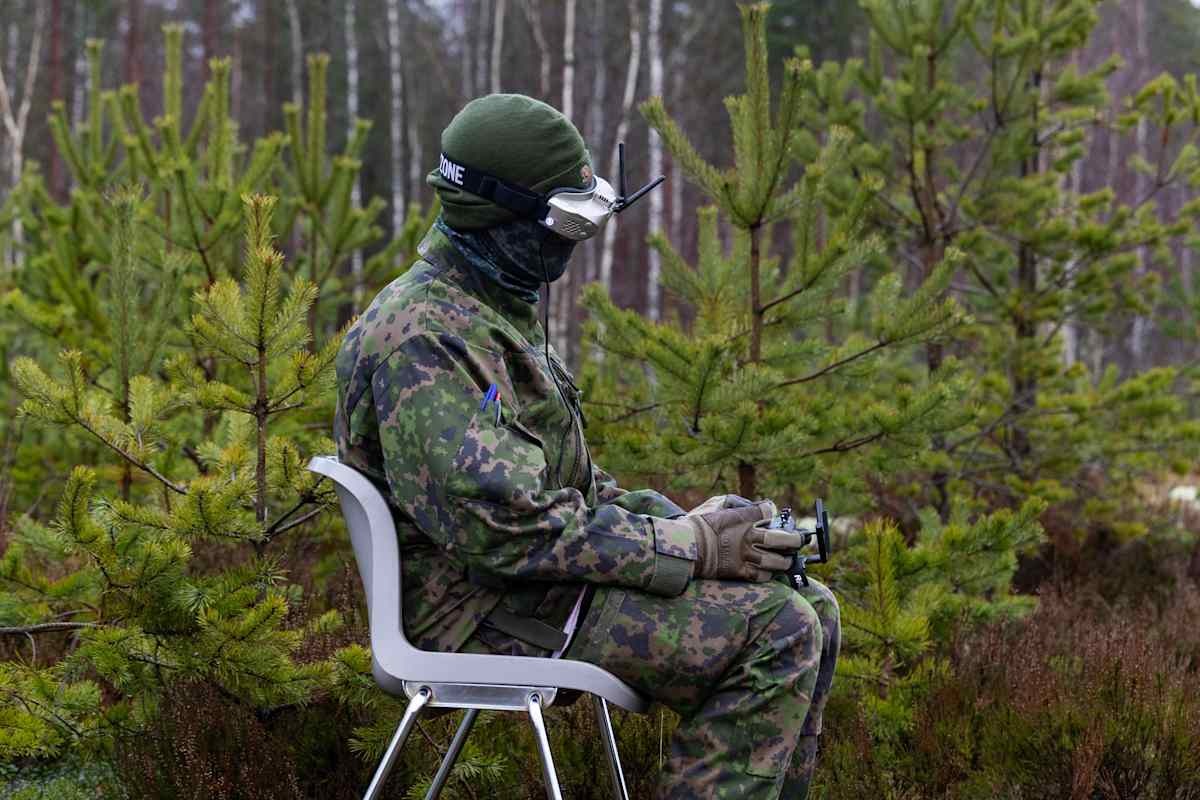
Finland is overhauling its military training programs as drones reshape the nature of warfare, according to YLE. Starting in 2025, every Finnish conscript will be required to undergo drone warfare training — a move driven by lessons drawn from Ukraine’s battlefield experience.
Mandatory drone skills for all conscripts
The Finnish Defense Forces have now made drone operations a standard part of conscript preparation, YLE says. The Finnish Army is introducing drone detection and neutralization systems in all units, with training becoming standard for conscripts. A pilot program already took place at the Niinisalo garrison in Satakunta, involving both professional and conscripted personnel. The first group to complete the new drone-focused training is set to end their service on 18 December.
"We understand why we’re doing this and we’re acting in time. Equipment procurement has already begun," said Commander of the Finnish Army Pasi Välimäki.
Troops begin with miniature drones, which require more precision than larger battlefield models. Initial training occurs indoors, gradually progressing to larger UAVs and FPV (first-person view) systems. Soldiers learn piloting, target dropping, enemy drone interception, and technical maintenance. Skill acquisition is tested throughout, adjusted for each recruit’s starting level.
Realistic warzone simulations
To prepare soldiers for the modern battlefield, the army has built three kilometers of trenches and firing positions in Hämeenkangas, also at Niinisalo. More drone warfare training grounds are planned for spring in Huovinrinne near Säkylä. On 9 December, conscripts conducted drills at the Hämeenkangas range, attempting to evade drones using smoke screens before retreating to dugouts.
FPV drone operators also practice deploying munitions and intercepting enemy UAVs. Maintenance and repair of unmanned systems is included in the curriculum, highlighting the multifaceted role drones now play in combat.
Finnish conditions pose unique challenges
While inspired by Ukraine’s drone warfare, Finnish commanders stress the need to adapt techniques and equipment to the local conditions. Systems that perform well in warmer regions are now tested under harsh Finnish weather. Both small and large drones face problems like rotor freezing and reduced visibility due to snow or fog.
Technology is evolving so rapidly that the military avoids locking in specific drone models.
“If we had bought Bayraktars, they’d just be lying unused in hangars,” Välimäki noted, referring to the Turkish drones popular early in the Russia-Ukraine war, but later becoming easy targets for Russia's air defenses.
No separate drone corps planned
Rather than establishing standalone drone units, Finland’s military doctrine integrates UAV operations into every branch. Virtual goggles and remote controllers now hold the same status as rifles and tactical gear — signaling a shift in what it means to be combat-ready.


