

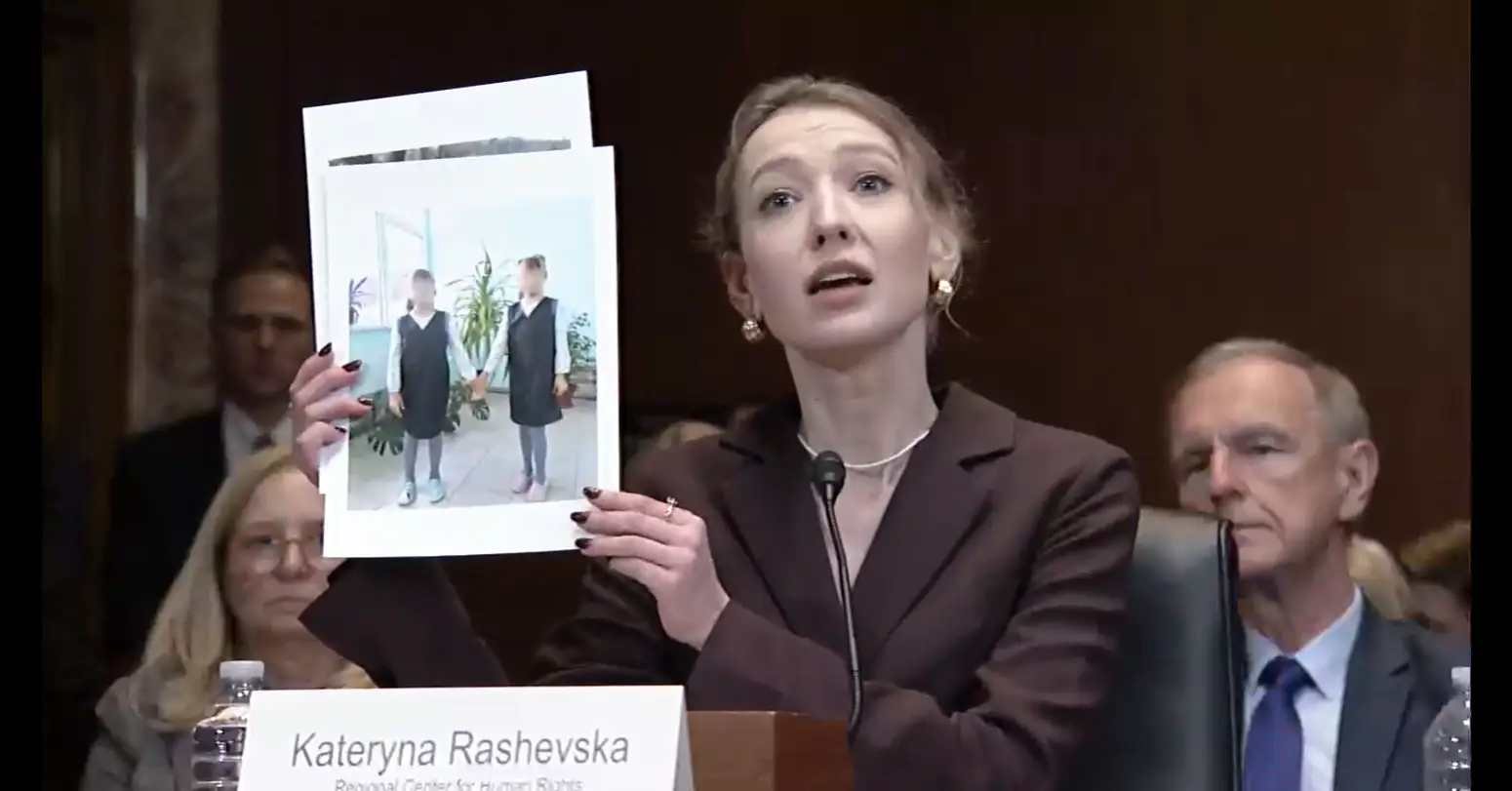
Key findings from the Senate hearing
- 165 camps documented across Ukraine, Russia, Belarus, and North Korea (Regional Center for Human Rights)
- 210 facilities identified by Yale in Russia and occupied territories
- 39 facilities run militarized programs with combat training
- 35,000 children estimated abducted (Yale) vs. 19,546 official Ukrainian count
- 1,859 children returned home to date
Russia has been sending abducted Ukrainian children to military indoctrination camps in North Korea, a human rights expert told the US Senate on 3 December.
Kateryna Rashevska of Ukraine's Regional Center for Human Rights testified that a 12-year-old boy from occupied Donetsk and a 16-year-old girl from occupied Simferopol were among those transferred to the Songdowon International Children's Camp — located 9,000 kilometers from their homes in the hermit kingdom's coastal city of Wonsan.
The revelation came hours before the UN General Assembly voted 91-12 to demand Russia's unconditional return of all deported Ukrainian children. The transfer of minors to a pariah state for military training represents an escalation of Moscow's systematic campaign to erase Ukrainian identity — and now appears to involve teaching children hatred of the United States alongside North Korean war veterans.
Anti-Western indoctrination at North Korean camp
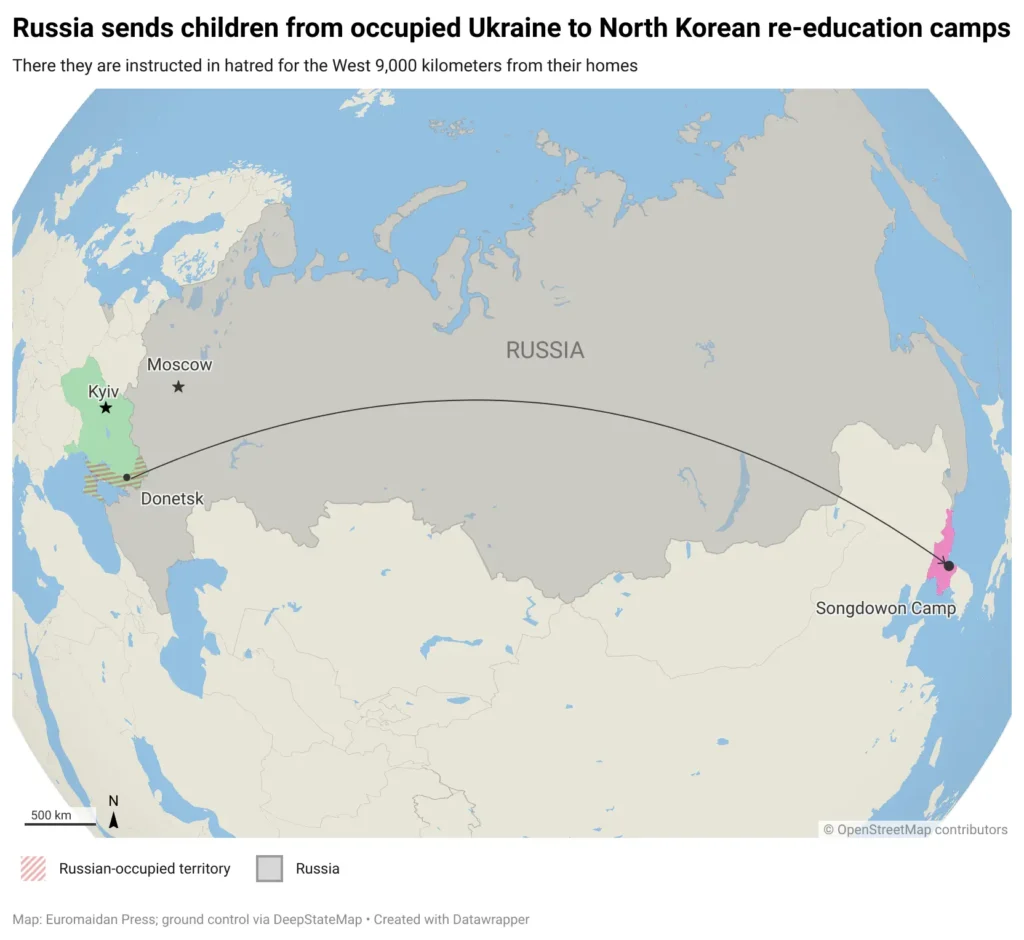
At the Songdowon facility, children are exposed to anti-Western military indoctrination unlike anything documented at Russia's other re-education camps.
According to Rashevska's testimony before the Senate Appropriations Subcommittee, the Ukrainian children "were taught to destroy Japanese militarists and met Korean veterans who, in 1968, attacked the US Navy ship Pueblo, killing and wounding nine American soldiers."

The USS Pueblo incident remains one of the most humiliating episodes in US naval history. North Korean forces captured the spy ship in international waters, killed one crew member, and held 82 Americans hostage for 11 months while subjecting them to torture and forced confessions.
The vessel still sits in Pyongyang as a propaganda trophy. Now Ukrainian children are being introduced to the attackers as heroes.
Russia's 165 re-education camps span four countries
Rashevska told senators her organization has documented 165 re-education camps where Ukrainian children are being militarized and Russified — operating across occupied Ukrainian territories, Russia, Belarus, and now confirmed in North Korea.
Separately, Yale University's Humanitarian Research Lab has identified 210 facilities in Russia and occupied territories used to hold and indoctrinate Ukrainian children. At least 130 of these implemented pro-Russian "re-education" programs, while 39 facilities run militarized programs including combat training, grenade throwing, and drone operation.

The Russian government directly operates more than half of these locations. But major corporations are also involved — oil giant Bashneft operates a children's camp, while truck manufacturer KamAZ runs a facility for minors in Tatarstan. Some children have been forced to produce military equipment, including drones and munitions, for Russian forces.
"Children there are isolated from family, teachers and friends, leaving them disoriented without familiar support structures," Maxim Maksimov, head of Ukraine's Bring Kids Back initiative, told the same hearing.
"Then Russia dismantles their identity. Being Ukrainian becomes something to hide. New documents, new guardians, and at 14, an imposed Russian citizenship — all designed to sever the legal and emotional path back."
From abduction to conscription: 35,000 children taken
Yale estimates that up to 35,000 Ukrainian children have been abducted since Russia's full-scale invasion in 2022 — far higher than Ukraine's official count of 19,546.
Nathaniel Raymond, the lab's executive director, told senators these children fall into four categories: those sent to camps, those taken from battlefields after their parents were killed, those separated from parents during filtration, and those hidden in Russian adoption databases.
"By 18, that imposed citizenship becomes the basis for conscription — to send them to fight the country they were taken from," Maksimov warned.
Save Ukraine founder Mykola Kuleba told the hearing his organization has already rescued children from Russian military academies and "even from the Russian army" itself.
Only 1,859 Ukrainian children have been returned home through rescue operations and diplomatic efforts. For those sent to North Korea, the path back may be even more difficult.
The Senate hearing detailed how Russia abducted Ukrainian children and scattered them across a network stretching from occupied Donbas to the Korean Peninsula — the furthest documented reach of Moscow's forced deportation program.


