

Ukraine adopted restrictions on 26 Russian energy companies, including oil giants Rosneft and Lukoil, on 30 November, synchronizing its sanctions with the United States, President Volodymyr Zelenskyy announced.
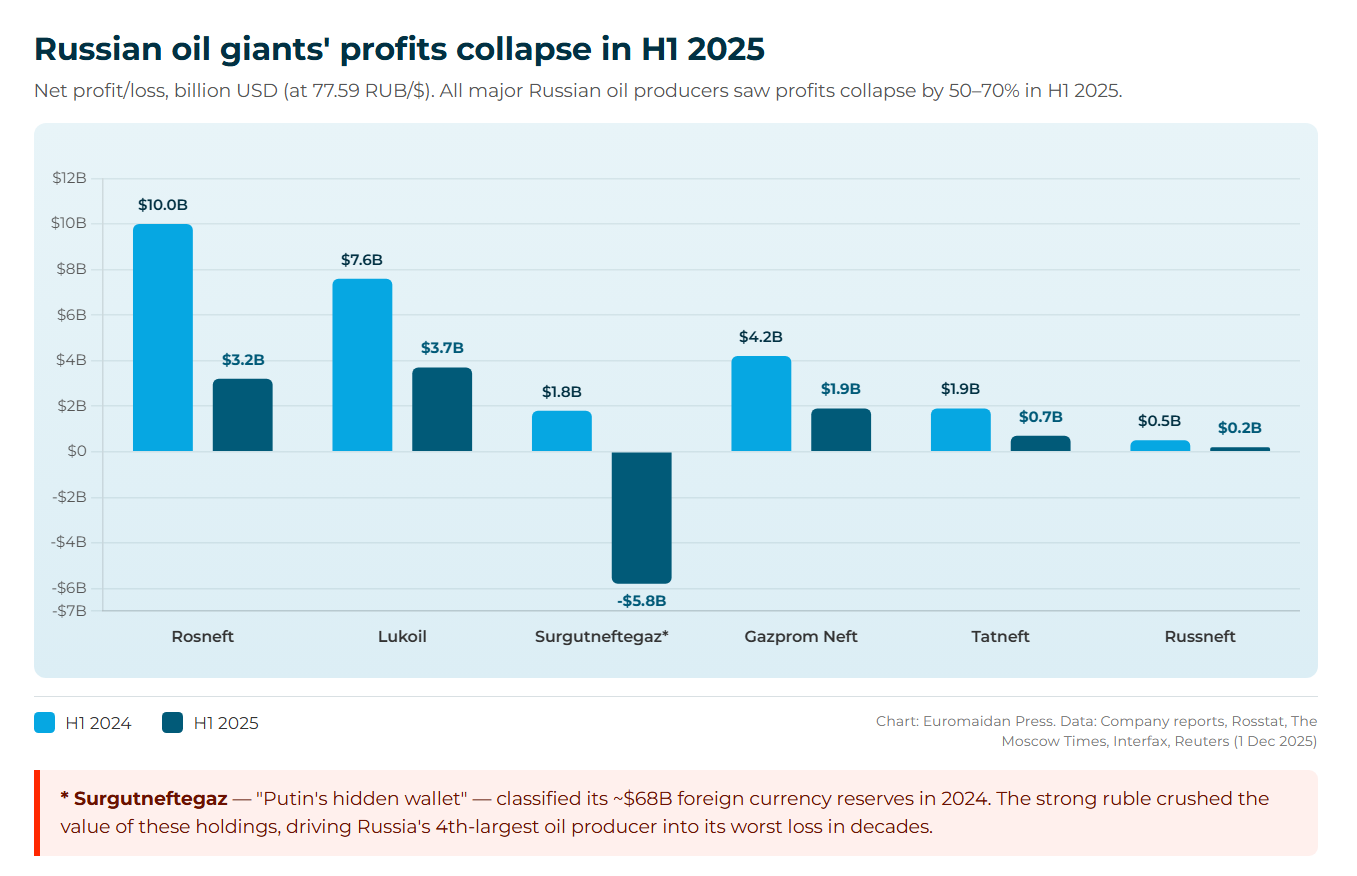
The move comes as Russia’s oil sector buckles under sustained pressure: nearly half of Russian oil companies—48.1%—operated at a loss in the first three quarters of 2025, Rosstat data cited by The Moscow Times shows. Rosneft itself lost two-thirds of its profit in the first half of 2025.
Sanctions pressure tightens
The US Treasury originally designated Rosneft and Lukoil on 22 October, with restrictions taking effect on 21 November. Together, the two companies account for roughly 55% of Russia’s oil production. Russian crude prices fell to multi-year lows following the designations, with major Indian and Chinese buyers pausing purchases.
For the first eleven months of 2025, Russia’s energy revenues have fallen 22% to approximately $102 billion, down from $141 billion in the same period last year.
The broader Russian economy is showing strain.
About a quarter of Russian firms with outstanding bank loans are now behind on payments—the highest share in at least 2.5 years, according to Central Bank statistics cited by The Moscow Times. Business investment has also weakened, with capital expenditure growth slowing almost sixfold from 8.7% in the first quarter to 1.5% in the second.
Kyiv signals alignment with Washington
Ukraine’s adoption marks its 13th synchronized sanctions package with Western partners this year, including the UK, Canada, Japan, and the EU.
The timing is noteworthy: the announcement came the same day Ukrainian and American delegations held talks in Miami.
Although no sources mention the sanctions being the topic of the negotiations, the synchronization signals Kyiv’s effort to demonstrate its value as a coordinated partner, even as ceasefire negotiations remain uncertain.
Trending Now
Presidential sanctions adviser Vladyslav Vlasiuk said pressure on Russia must increase through year-end, with priorities including further coordination with partners and preparation of the EU’s 20th sanctions package.


