

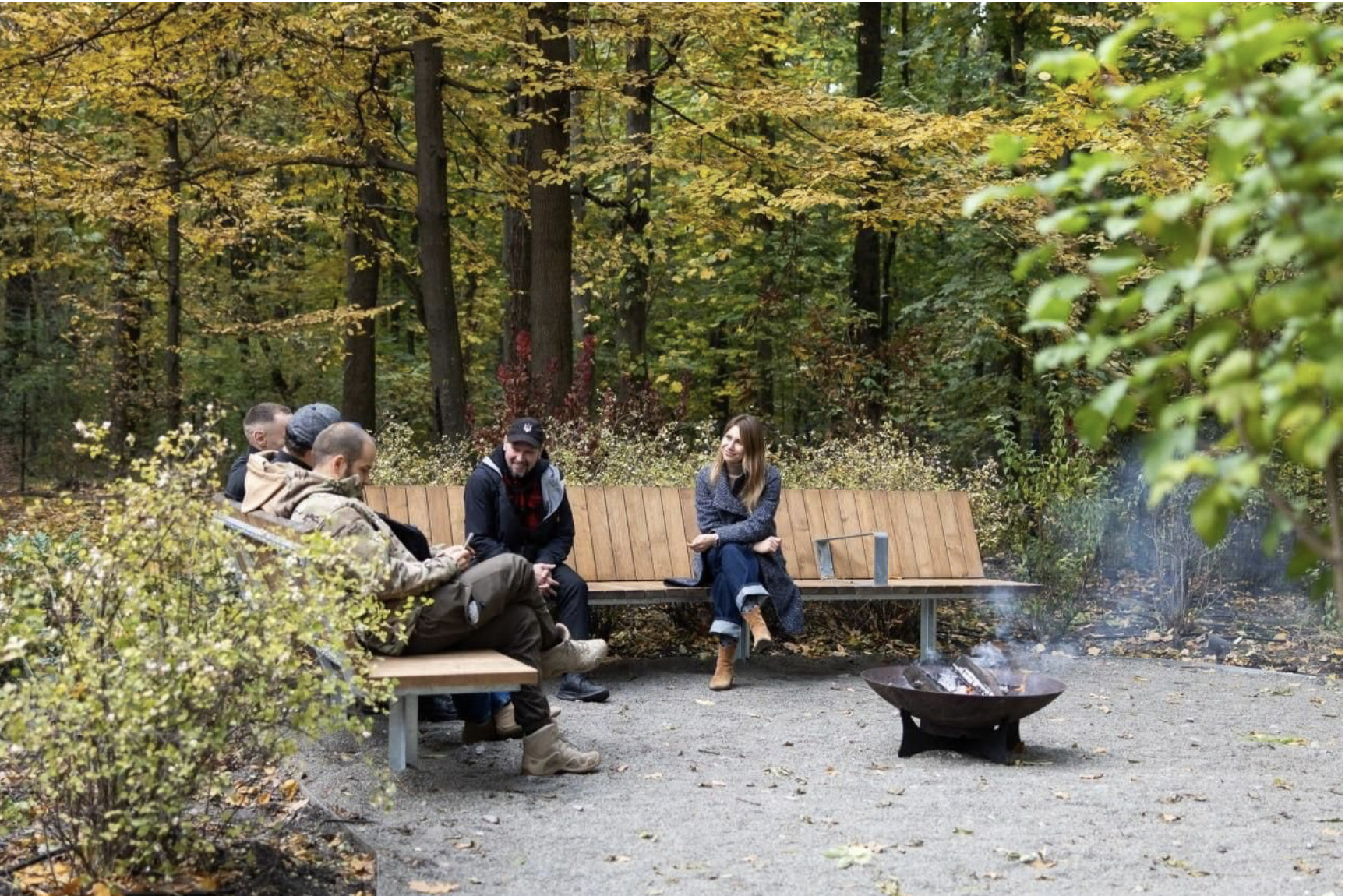
On 17 October, a therapeutic garden opened at Kyiv's VDNKh, a major exhibition and recreation complex, to support emotional recovery for veterans, military personnel and anyone else who needs it, according to the Ministry of Health.
Soldiers experience trauma from witnessing battlefield deaths, managing disrupted family and social lives, and adapting to life after combat injuries. Civilians endure ongoing attacks, sleepless nights, stress and displacement.
This has led to widespread anxiety and depression symptoms across the population, with the Ministry of Health estimating that the majority of Ukrainians need psychological help. Many combatants develop PTSD, yet stigma prevents them from seeking treatment, leading some to turn to substance abuse.
The garden includes zones for:
- therapeutic gardening
- adaptive sports activities
- somatic practices
- a children's playground
- informal gathering areas
- group meeting spaces
Plants were selected based on their impact on emotional state, interacting with visitors through all five senses to help reduce emotional tension, the ministry reported. Seasonal flowering ensures the garden remains functional year-round.


The space aims to support the physical, psychological and social health of military personnel, veterans and others who need it through contact with nature and movement.
First Lady Olena Zelenska, who initiated the project, said at the opening that places offering safety, calm and harmony are particularly lacking for those who have experienced the pain of war.
"This is the therapeutic effect of nature and interaction with it, already proven by many scientific studies," she said, expressing hope that similar spaces will multiply across Ukraine.
Officials view it as a step toward building modern post-rehabilitation infrastructure, with similar gardens potentially appearing at medical facilities and public spaces nationwide.

Minister of Health Viktor Liashko emphasized that psychological support for those who experienced war trauma is a shared societal task.
"We need to create conditions that help a person recover — physically, psychologically and emotionally," he said.
All infrastructure follows barrier-free access principles, with hard non-slip surfaces, raised flower beds, benches with armrests, Braille navigation, contrast signs and a tactile map.

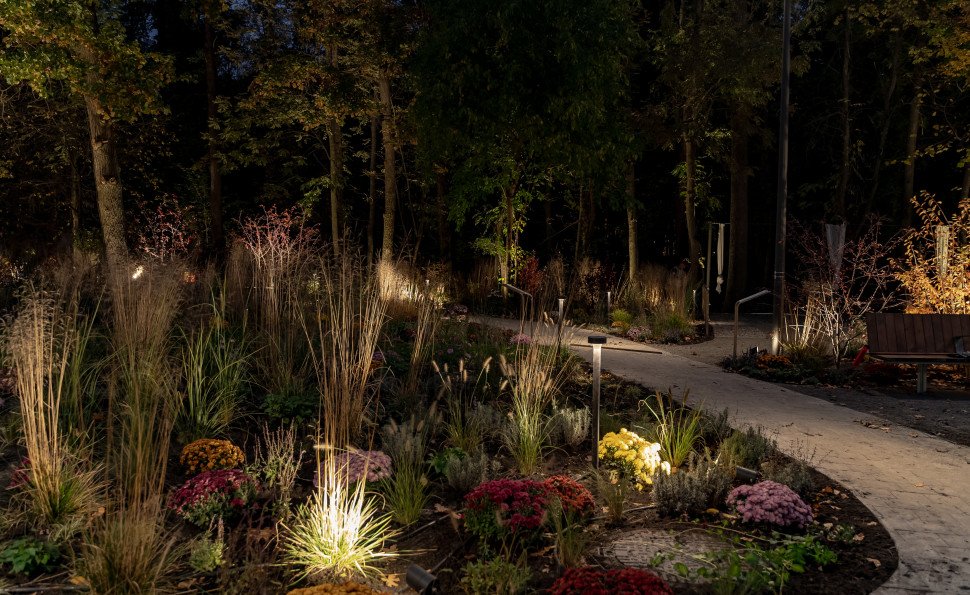
The space's development involved psychologists, psychotherapists, art therapists, hospital workers, volunteers and landscape architects from Ukraine, Europe and Great Britain, who consulted with veterans, military personnel, rehabilitation patients, elderly people and medical institution representatives.
Read also
-
Ukrainian “toy therapy” project helps 30,000 war-affected children cope with trauma
-
Ukrainian mayor eager to open Europe’s first center for hemp therapy
-
Modern battlefield trauma is more severe than ever as Russian weapons evolve, says Ukrainian combat medic
-
Colombian band trolls Russians with Ukrainian songs—300,000 followers watch the rage unfold


